

Medical tourism in Turkey: twenty years of building trust
Aslı Akyavaş Pamuk has led international services at Anadolu Medical Center since 2005. She explains what medical tourism really is, how a single 201-bed hospital came to treat patients from 65 countries, and why trust — not marketing — built it.
Can you explain what health tourism actually is?
The word ‘health’ brings hospitals, illness and mortality to mind; ‘tourism’ suggests leisure and travel. Because of that contradiction, many people struggle to picture what health tourism is. Its starting point is simply patients travelling abroad for treatment. What we mostly deal with is better described as medical tourism — or medical travel.
How do you convince patients in other countries to come to Turkey?
The heart of it is building trust. What we promise cannot be touched or seen. You are telling someone thousands of kilometres away that you will try to give them back their most precious asset — their health — and often convincing them to leave their country for the first time. You do it with your experience, the quality of your service, your track record, and sometimes a single word.
Our relationship with a patient begins with an email or a phone call and lasts for years. Unlike other kinds of tourism, the process doesn’t end when the patient leaves the hospital — we stay with them for everything that follows. We have witnessed a patient with no chance of treatment at home, whose only dream was to become a pilot, return to normal life and make that dream come true. We have seen a mother arrive by air ambulance as a last chance and walk out of the hospital — and, years later at a check-up, embrace the interpreter who first welcomed her and weep. Not every story ends happily; when, despite everything, a patient cannot be saved, it is also our duty to bring them and their family safely home. That trust, and how you earn it, is the simplest way I know to explain health tourism.
What was the situation when you started?
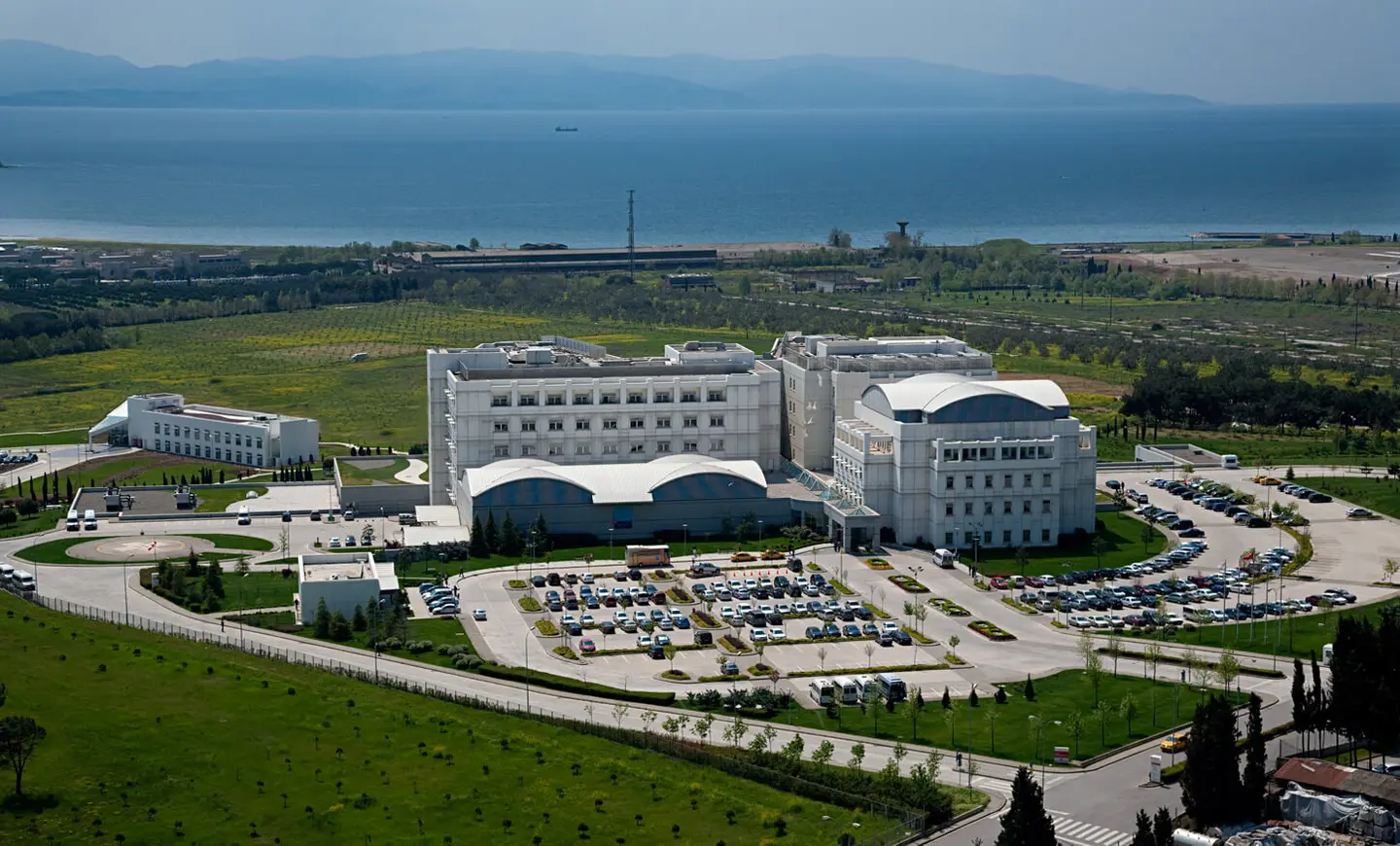
When I came for my interview in 2005, I was struck to hear that Anadolu Medical Center’s vision was to serve patients not only in Turkey but across the surrounding region. They were looking for a manager to build this. The hospital had been designed as a 201-bed multidisciplinary general hospital with every specialty — but with the goal of becoming a center for cancer care in particular.
I’m a graduate of Izmir American College and Boğaziçi University (International Relations), and I studied marketing at UCLA. After some years in the United States and about five years at the Koç Group, I joined Anadolu Medical Center in 2005. Back then Turkey meant sea, sand and sun, and Turkish Airlines was only beginning to expand its routes. A country known for summer tourism, and largely unknown for healthcare, now receives patients from 65 different countries. That is an achievement I’m proud of — and I began dreaming of it soon after I was hired.
Turkey wasn’t well known for healthcare at first. What was your starting point?
Two things inherited from the Ottoman era are very strong in Turkey: the military and medicine. I believe the Turkish physicians trained at Mekteb-i Tıbbiye-i Şahane — rooted in the Tıphane founded in 1827 — laid the foundations of the modern medicine we have today. Compared with many neighbouring countries there is a well-structured, high-quality system, and people who work with real dedication. Patients were looking for modern technology and good doctors, but also for quality communication — a team always beside them, sharing their worries and their joys. That is where the system we built made its difference.
You mention a system — did you have a model? A country you looked to?
In 2006 a conference in Singapore called ‘Medical Travel’ caught my eye. When I saw that top executives from leading hospitals in Thailand and Singapore were attending, I asked to go. I spent that time almost glued to the managers of Bumrungrad Hospital — then the first name in medical tourism. They saw there was no getting rid of me and agreed to share their experience; it helped that we didn’t serve the same patient population, so we weren’t competitors. What they taught me confirmed I was on the right track, and I finally understood why it was called ‘Medical Travel’ rather than ‘Medical Tourism’: for patients travelling for cancer treatment or major surgery, the ‘tourism’ element is almost non-existent.
I returned to Istanbul full of enthusiasm. It wasn’t easy to explain a then-unknown field, build a system and convince people to believe in it. One spring morning in 2006 or 2007, running from country to country as a one-person department, I was invited to the Thursday physicians’ meeting to present what we were doing. I’ll never forget it — despite the very modest figures I put up, I became the joke of the room. Some doctors teased me: ‘Bring in that many patients and we’ll carry you on our shoulders,’ or ‘bring that many and I’ll take you to dinner.’
Where did the first patients come from — did they resemble Singapore’s profile?
The first patients came from Eastern Europe, and you’ve touched on something important: they resembled neither the patients leaving Turkey for treatment abroad nor those travelling to Singapore. Many were not wealthy. They were a different, harder-to-manage group. The treatment they needed didn’t exist in their countries, or they didn’t believe there were doctors qualified enough to provide it. Many were highly complex, some genuinely searching for a miracle — and they knocked on our door with very high expectations but modest budgets. Managing that equation fell to us.
As I had learned in Singapore, I spent a lot of time with these patients and their families and noted their impressions and feedback. It became clear that satisfying our foreign patients and focusing on their needs would force us, as an institution, into a change of culture.
What do you mean by a change of culture?
In our target markets we worked with the right local partners and raised awareness through both digital and traditional channels; recommendations from satisfied patients were a huge support. As patient numbers grew, so did our experience. The management that had said ‘just find the patients — don’t worry about the rest’ realised there was, in fact, a great deal to worry about. Bringing a patient in and managing them inside the hospital could not be run as two independent processes. Some physicians, who said they hadn’t seen such a complex patient group in years, couldn’t hide their surprise at certain cases — patients who had presented too late, or received incomplete or incorrect treatment. Managing them required teamwork, and those teams could not work in isolation: the side bringing the patient, the side handling billing and the side treating the patient all had to be orchestrated from a single hand.
We drew ideas from our partner, Johns Hopkins. The many boards and meetings created to protect high standards were very effective at setting rules — but they didn’t solve communication problems at the clinical level, and those shook the hard-won trust of patients. Boards and rules helped, but they weren’t enough to turn all of this into an organic culture.
What was the solution — what did you do differently?
We did many things unconventionally, but the two most important were placing doctors and nurses within the international services department, and putting the patient at the centre. I also want to stress something I consider vital: the emotional and existential burden of a patient travelling for treatment is vastly greater than that of a sea-and-sand tourist. Managing the psychology of a relative who entrusts you with their child, mother or spouse — often on the edge of life and death — is a large and important part of the job. For a local patient this is fairly routine; for someone healing in a foreign country and culture, coming to see your team ‘like family’ is an enormous thing. I believe we have largely achieved that, and it is my greatest source of pride in this sector.
What does ‘putting the patient at the centre’ mean?
Let me answer with a memory. As our patient numbers were slowly growing, the medical director of the time called me in and said, somewhat sharply, ‘You and your team should stop treating patients like relatives.’ We didn’t stop — and that approach is the key to our success today. The professor had made a very accurate observation; it was precisely why foreign patients chose our hospital and recommended it to others.
As the economist Richard Thaler — the 2017 Nobel laureate — showed, cost and return are not the only drivers of economic decisions; a person’s social context and psychology weigh heavily on individual choices. Our team’s one-to-one, trust-based relationship with patients has been the key to our success. Sometimes the costs our patients pay are higher than our competitors’, in line with the quality of care and the complexity of the surgery — yet, among hundreds of hospitals, they still choose us, leave satisfied and recommend us. Looking back, the success of the system we built is almost a proof of that Nobel-winning theory.
In time — the professor included — everyone became convinced that the right medical-tourism strategy is a patient-centred one, and we put it into practice together. Concepts like ‘person-centred care’ are standard today, but when we were building this they barely had a name. It was a culture change, and like any change it took time and effort. In 2013, with the Planetree accreditation, we finally learned that what we had been doing was called ‘patient-centred care’ — but accreditations and rules mean nothing until they become culture. We embedded that culture.
What do you mean by the structural change?
We convinced management that doctors and nurses should work within the international services department, and we began working alongside clinicians inside the department — a first in Turkey.
So do they examine or follow up the patients?
No — they are not part of any treatment process. They closely follow every step of the international patient’s journey, ease communication between the physicians, the patient and the family, and prevent gaps in interdisciplinary communication. These patients are highly complex and rarely present with a single problem; they often need several clinics and are treated by many physicians at once. Miscommunication between departments used to lengthen stays and raise costs. Our medical team strengthened communication between departments and doctors, sped up the consultation process, and removed the time losses that eroded patients’ sense of trust.
To make it concrete: a large number of documents, doctor’s notes and test reports arrive in another language, often of uncertain accuracy, and must be tightly translated and summarised. If you hand a doctor’s report to an ordinary translator, they translate everything — which is both a waste of time and confusing. The real skill is knowing which parts matter and which documents the treating doctor actually needs. Summarising complex patients well is the most critical job of our international units, and it can only be managed by doctors, nurses and health professionals who speak different languages. We recognised these needs very early and were among the first to act on them. It matters so much to us that one of my deputy directors today is a physician — an internal-medicine specialist — who works with me on sales and marketing while applying his clinical judgement at every step.
How much did these changes show up in the numbers?
As a single-site, 201-bed hospital, we won Turkey’s third-place award for service exports in healthcare three times — according to the figures of the Turkish Exporters Assembly’s Services Exporters’ Association — competing against large hospital chains with many sites. Today we are a center visited by around 1,500 patients a month from 65 different countries. And, contrary to what many assume, we achieved these numbers not in hair transplants, plastic surgery or dentistry, but by managing highly complex work: oncology, hematology, robotic surgery and bone marrow transplantation.
Which countries do most patients come from, and what is the average spend?
We accept patients from many countries — Romania, Bulgaria, Georgia, Uzbekistan and Kazakhstan above all, but also from the United States to Russia and from Pakistan to the United Kingdom. According to USHAŞ data, in 2024 a total of 1,506,442 people came to Turkey for healthcare, generating around USD 3.02 billion. Because the patients we treat generally have oncological and hematological conditions, the average spend per person is around USD 20,000–30,000.
“A health-tourism patient brings roughly ten times the revenue of a sea-and-sand tourist — yet almost none of the structure, training and titles of classic tourism exist in health tourism, or are only now being defined. That is a debate we owe both the state and the sector.
You started as a very small team. How large is it now?
An adventure that began with a core team of two or three has become a team of 178 — and that is only the international services staff. Of course we don’t do this alone; every member of hospital staff has contributed to this success. The truly active work is done by our interpreter team, an area that still lacks a formal professional definition — we created the definitions ourselves along the way. Many were hired for their languages, with no prior healthcare experience, and learned the work as a craft; its standards are still inadequate.
With my team, we work with everything we have to sustain the relationship that begins with a patient’s first phone call — before they arrive in Turkey, inside the hospital, and after they return home. We attend to the smallest need of the patient and their family 24/7 and try to make them feel at home. As I said at the start, ours is not a short-term model but a years-long friendship — a kind of kinship. That approach is the key to our success.
Get a free medical second opinion
Send your medical documents and our multidisciplinary team will review your case within 48 hours — free and with no obligation.